When homeowners notice a small issue on their tiled roof, like a cracked tile or water getting in, the instinct is often to look for a quick fix. One of the most common mistakes we see across Brisbane and the Gold Coast is the use of silicone on tiled roofs.
While silicone might seem like an easy solution, it almost always makes the problem worse.
At Storm Call Roofing Projects, we regularly attend roofs where silicone has caused serious water damage. Here’s why silicone should not be used on tiled roofs, and what actually happens when it is.
How a Tiled Roof Is Designed to Work
Tiled roofs are not designed to be sealed watertight like a bathtub. Instead, they rely on gravity and overlap to move water safely down the roof and into the gutters.
Each roof tile has a rib, also known as the water course. This rib channels water away from the join between tiles and directs it down onto the next tile below. From there, the water continues down the roof, tile by tile, until it reaches the gutter.
When tiles are intact and correctly positioned, this system works extremely well, even during heavy rain.
What Happens When a Tile Breaks
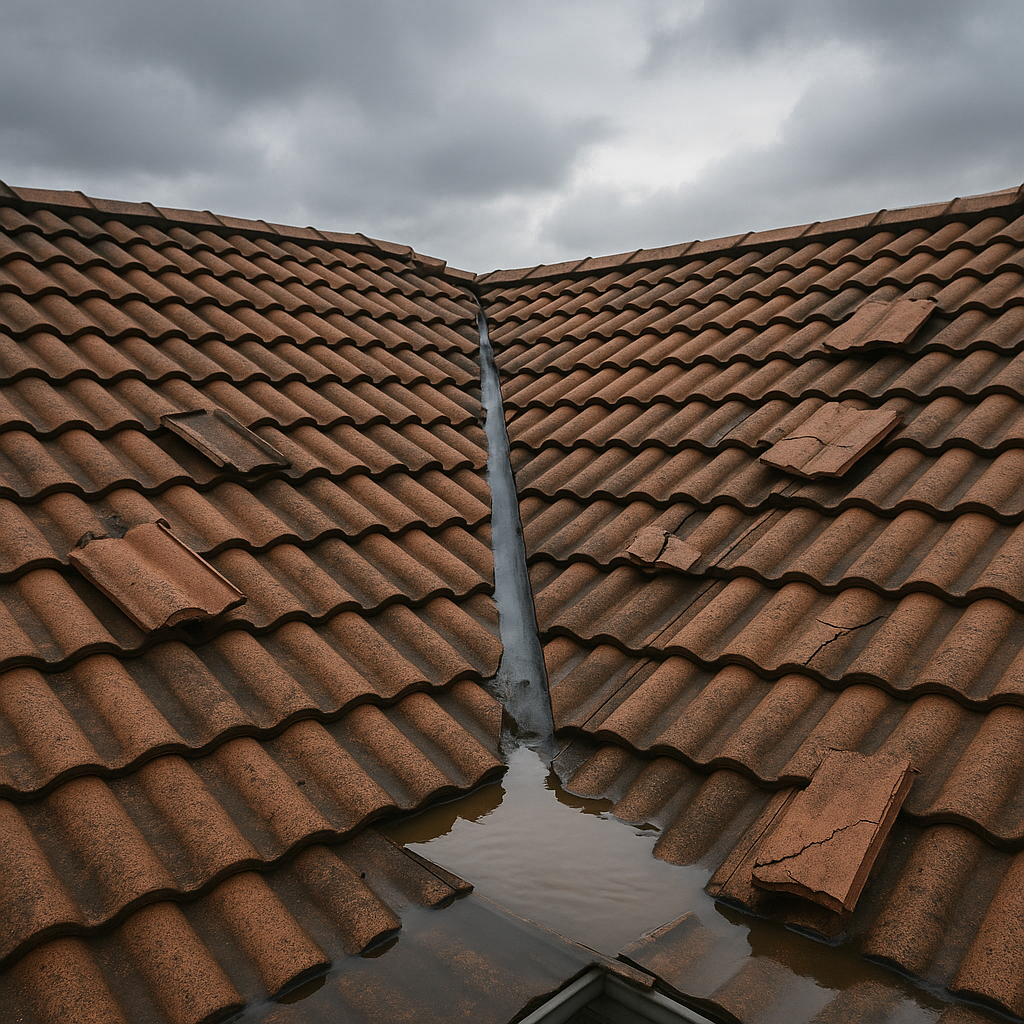
Over time, the nose of a tile can crack or break. This often happens due to age, foot traffic, or storm activity. When this occurs, water may begin to enter where it shouldn’t.
Instead of replacing the damaged tile, some people try to fill the broken area with silicone, thinking it will stop the leak.
Unfortunately, this does the opposite.
Why Silicone Makes Roof Leaks Worse
When silicone is applied to a tiled roof, it blocks the natural water course. Water flowing down the roof hits the silicone instead of being directed onto the next tile.
Once this happens, the water is forced sideways or backwards. Instead of draining safely, it is redirected straight into the roof cavity.
This creates a direct path for water to run into the ceiling space, often leading to ceiling stains, insulation damage, and mould. In many cases, the leak becomes far worse than it was before silicone was applied.
What started as a minor tile issue can quickly turn into significant internal damage.
Silicone Also Prevents Proper Repairs
Another major issue with silicone is that it contaminates the surrounding tiles. Once silicone has been applied, it is extremely difficult to remove completely.
When we see silicone on a tiled roof, it often means the affected section needs to be fully re-tiled. Spot repairs are no longer possible because tiles no longer seat or drain correctly once silicone has been used.
This turns a simple tile replacement into a much larger repair job.
When Silicone Is Sometimes Used
There is only one situation where silicone may be used on a tiled roof, and that is in a roof valley.
Even then, it is used sparingly. A single bead of silicone may be applied in a valley to assist with water control, but this is done carefully and only where appropriate.
Outside of valleys, silicone has no place on a tiled roof.
Why We Never Use Silicone on Tiles
At Storm Call Roofing Projects, we do not use silicone on tiled roofs because it goes against how tile systems are designed to function.
Instead, we fix the problem properly by:
- Replacing broken or cracked tiles
- Re-aligning tiles so water flows correctly
- Repairing underlying issues that caused the damage
- Ensuring water is directed safely into gutters
This approach restores the roof’s natural drainage system and prevents future leaks.
Final Thoughts
Using silicone on a tiled roof may seem like a quick fix, but it often causes more damage than the original problem. By blocking the water course, silicone redirects water into the roof cavity, leading to serious leaks and internal damage.
If you’ve noticed silicone on your roof, or you’re dealing with a recurring leak, it’s important to have it assessed by a professional.
Storm Call Roofing Projects specialises in tiled roof repairs across Brisbane and the Gold Coast. We fix roof problems properly, without shortcuts that lead to bigger issues later.
Contact us today to arrange an inspection and get expert advice you can trust.