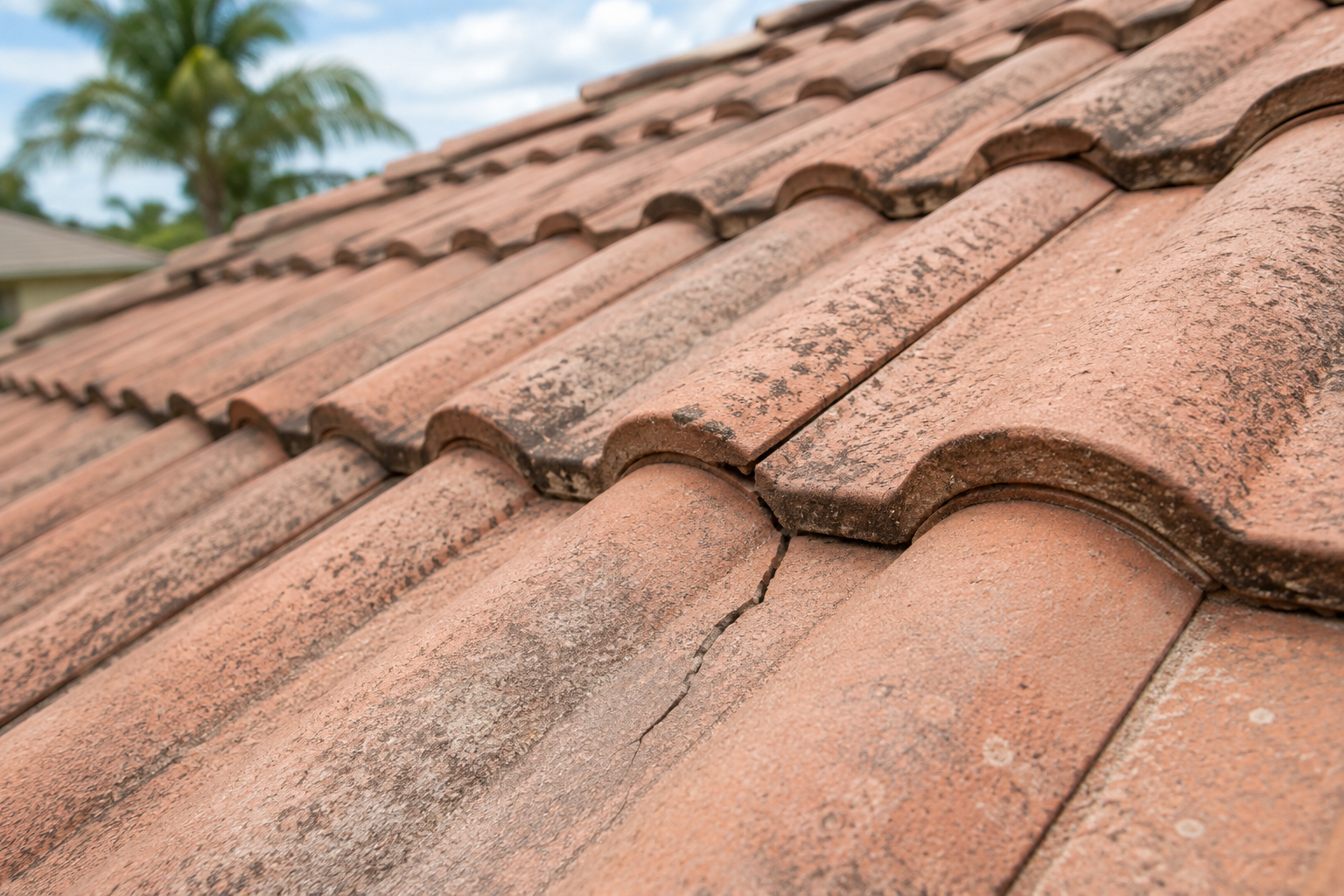
Roof problems in a unit complex or townhouse development are rarely as simple as they are on a standalone house.
One leak can affect several lots. The person who notices it is often not the person responsible for fixing it. And the decision to spend money usually has to go through a committee.
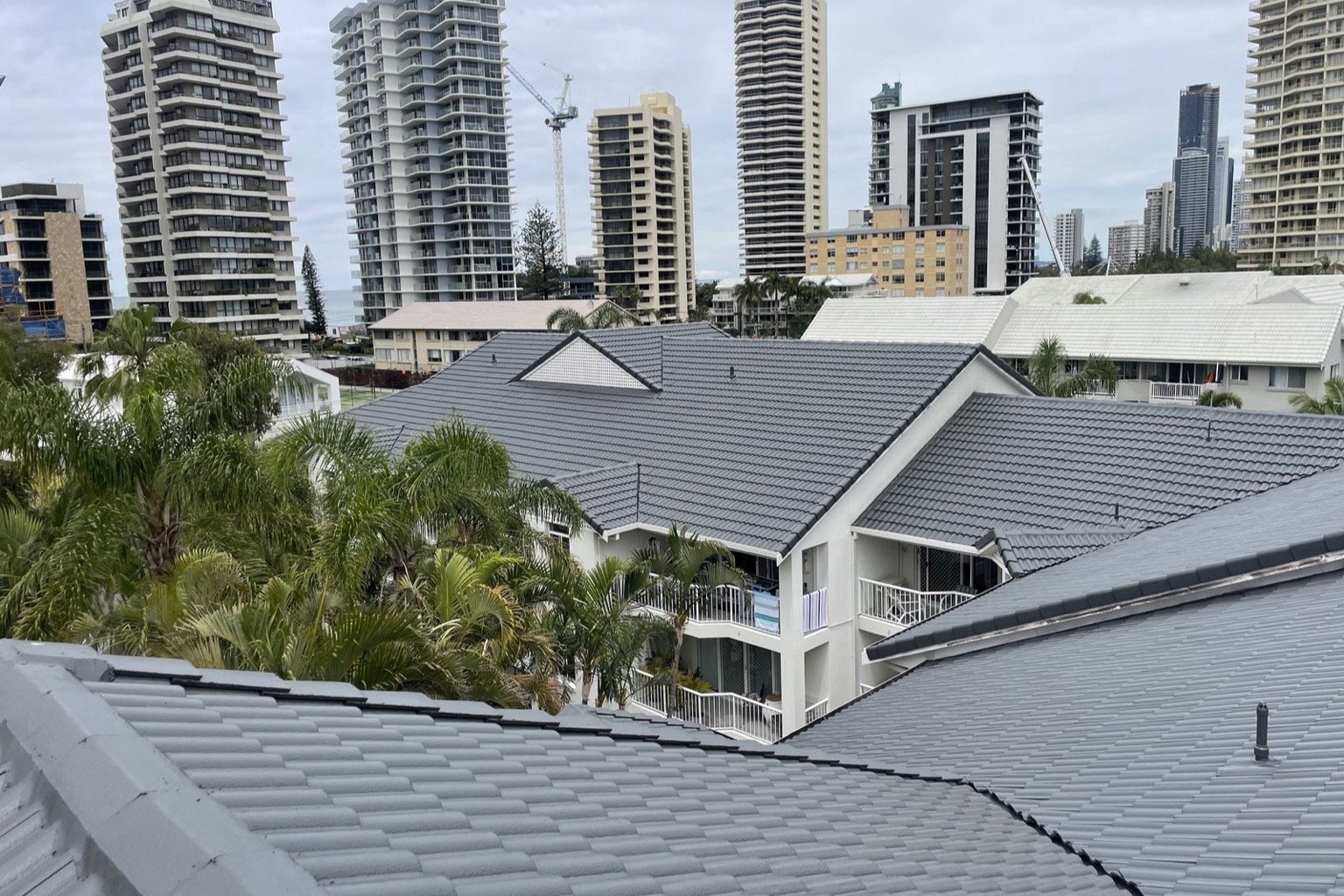
Across Brisbane and the Gold Coast, a large number of older unit blocks, townhouse complexes and low rise developments are tiled, and many of them are now at the age where the roof needs real attention rather than another patch.
At Storm Call Roofing Projects Pty Ltd, we work with body corporates, strata managers and property managers on tiled roofs across South East Queensland. This guide covers what tends to matter most when a complex is dealing with a roof.
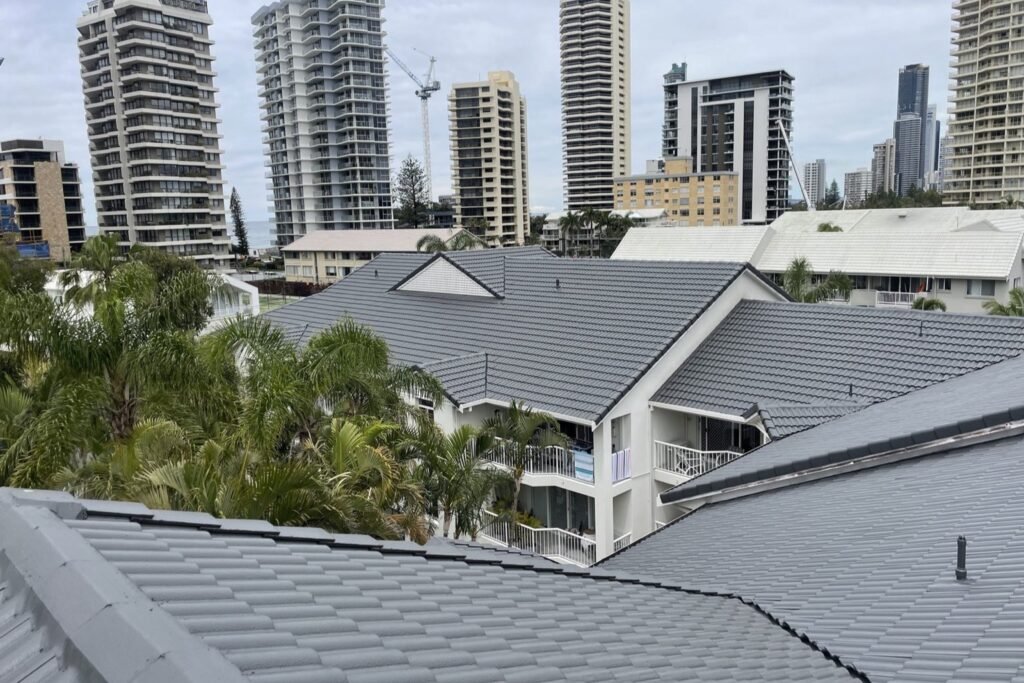
The Roof Is Usually Common Property
In most Queensland schemes, the roof is common property rather than part of an individual lot.
That generally means the body corporate is responsible for maintaining and repairing it, and the cost is shared across the scheme rather than carried by the owner of the unit where the leak appeared.
There are exceptions, and the boundaries depend on the plan type and the scheme’s own by-laws. If there is any doubt about where responsibility sits, that is a question for your body corporate manager or a strata lawyer before the work is committed to.
What we can say from the roofing side is that treating a shared roof as a shared asset almost always produces a better outcome than treating each leak as one owner’s problem.
One Roof, Several Lots, One Leak
Water does not respect lot boundaries.
On a tiled roof, water that enters through a cracked tile or a failed valley can run along battens or sarking for a considerable distance before it finds a way into a ceiling. The unit that reports the stain is frequently not the unit the water entered above.
This is why chasing a leak from inside a single unit so often fails. The repair gets done directly above the stain, the next heavy rain arrives, and the leak comes back in the same place or a new one.
Finding the actual entry point means looking at the roof as a whole, not just the section above the complaint.
Why Repeated Patch Repairs Become Expensive
Most complexes start with patch repairs, and for a while that is reasonable.
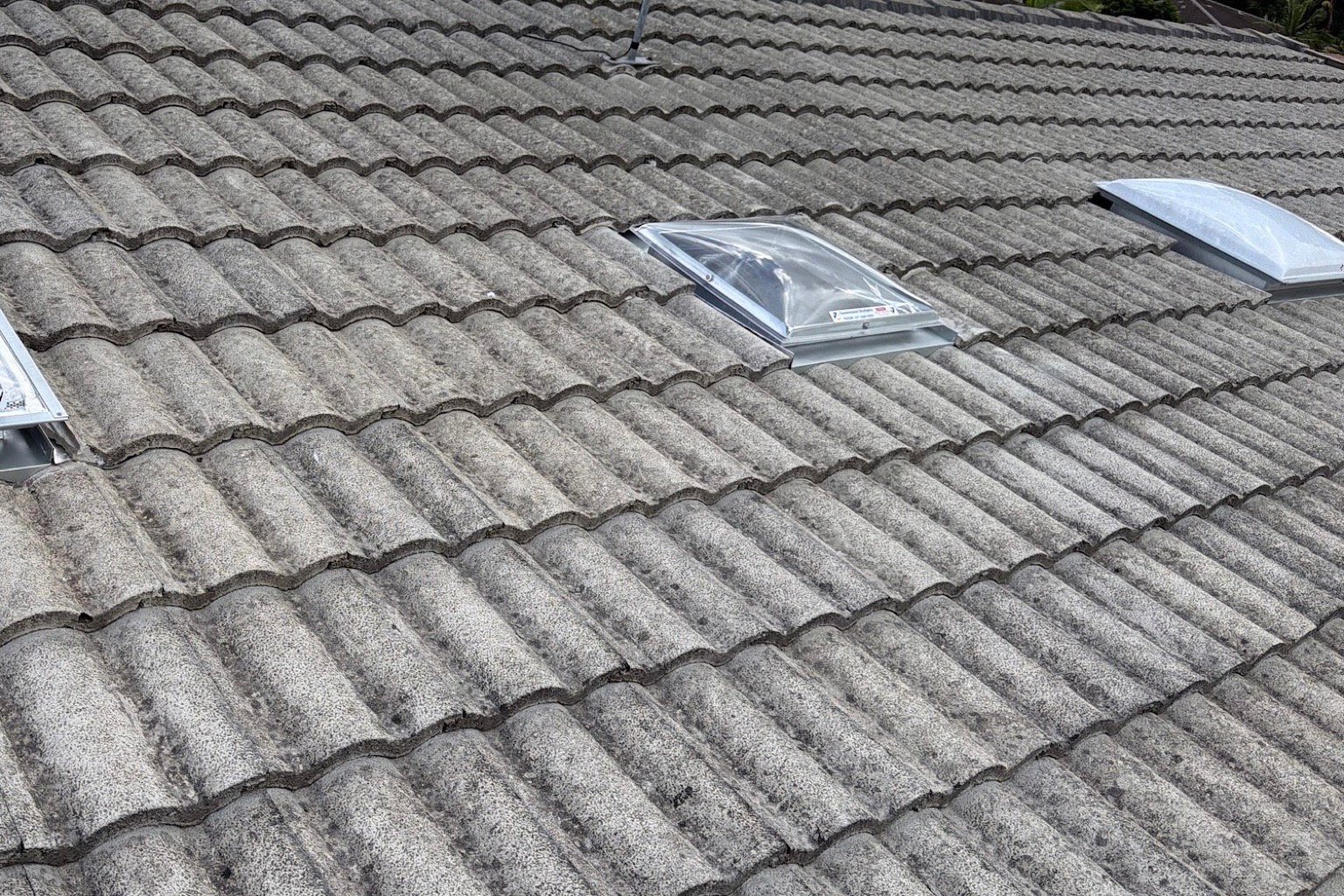
The problem comes when a roof reaches the stage where the bedding is failing across the whole complex, the tiles are becoming porous, and the valleys are tired. At that point, each new leak is a symptom rather than an isolated event.
Paying for individual call outs several times a year, plus the internal repairs each one causes, can quietly add up to more than dealing with the roof properly once.
It also creates frustration. Owners see money being spent and problems continuing, which makes the larger decision harder to get across the line later.
Start With a Whole of Complex Roof Report
Before a committee can make a sensible decision, it needs to know the actual condition of the roof.
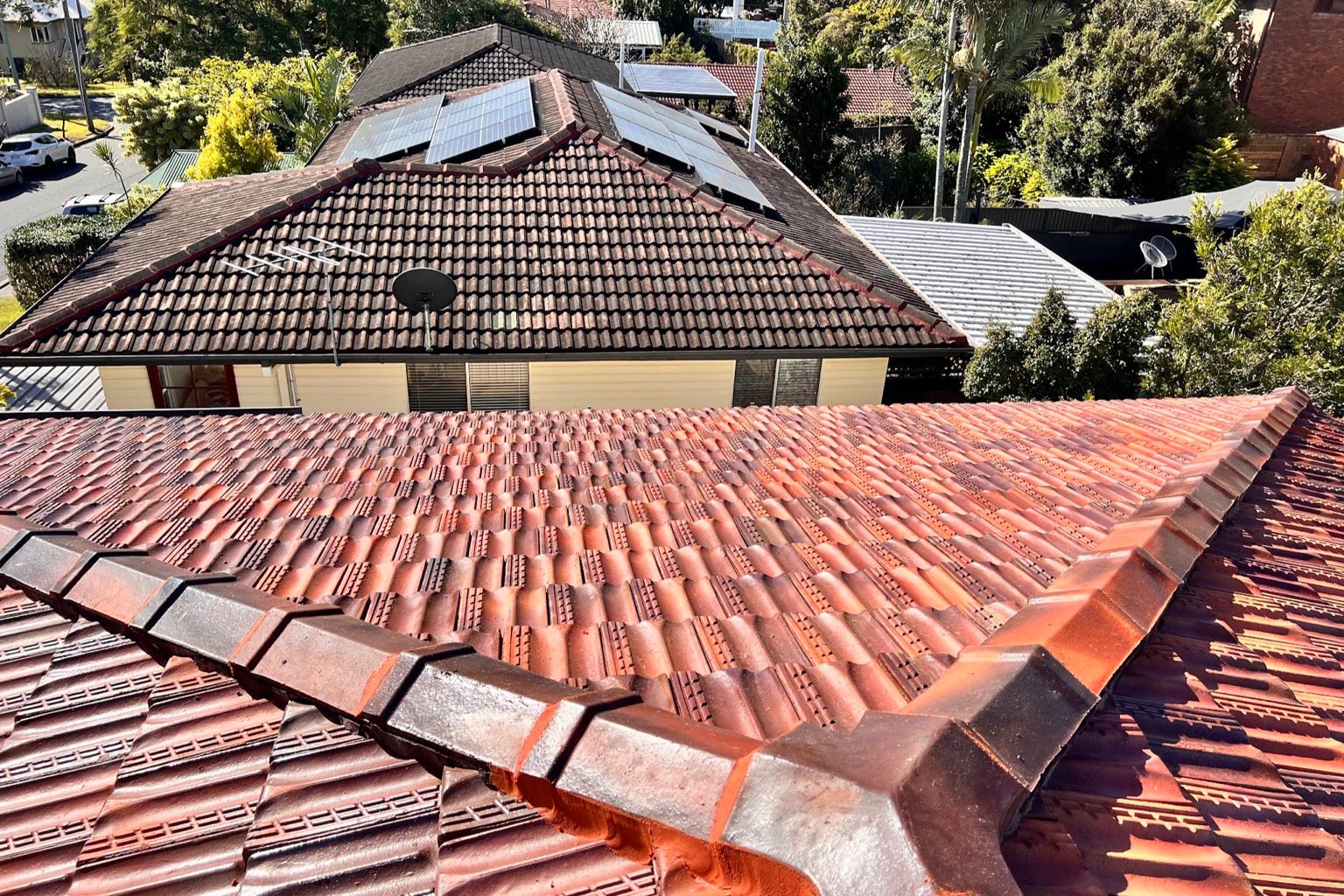
A proper report should cover every building in the scheme, not just the one that reported a leak. It should note the condition of the tiles, ridge capping, bedding and pointing, valleys, flashings, gutters and downpipes, and identify where water is entering.
It should also be clear about what is urgent, what can reasonably wait, and what is approaching the end of its life.
That distinction matters, because it lets a committee stage the work and budget for it rather than being forced into an emergency decision after the next storm.
What Should Be in a Quote for a Strata Roof
Quotes for multi building work are easier to compare when they contain the same information. It is reasonable to ask for:
- A clear scope per building, not a single lump sum for the site
- Licence and insurance details for the contractor
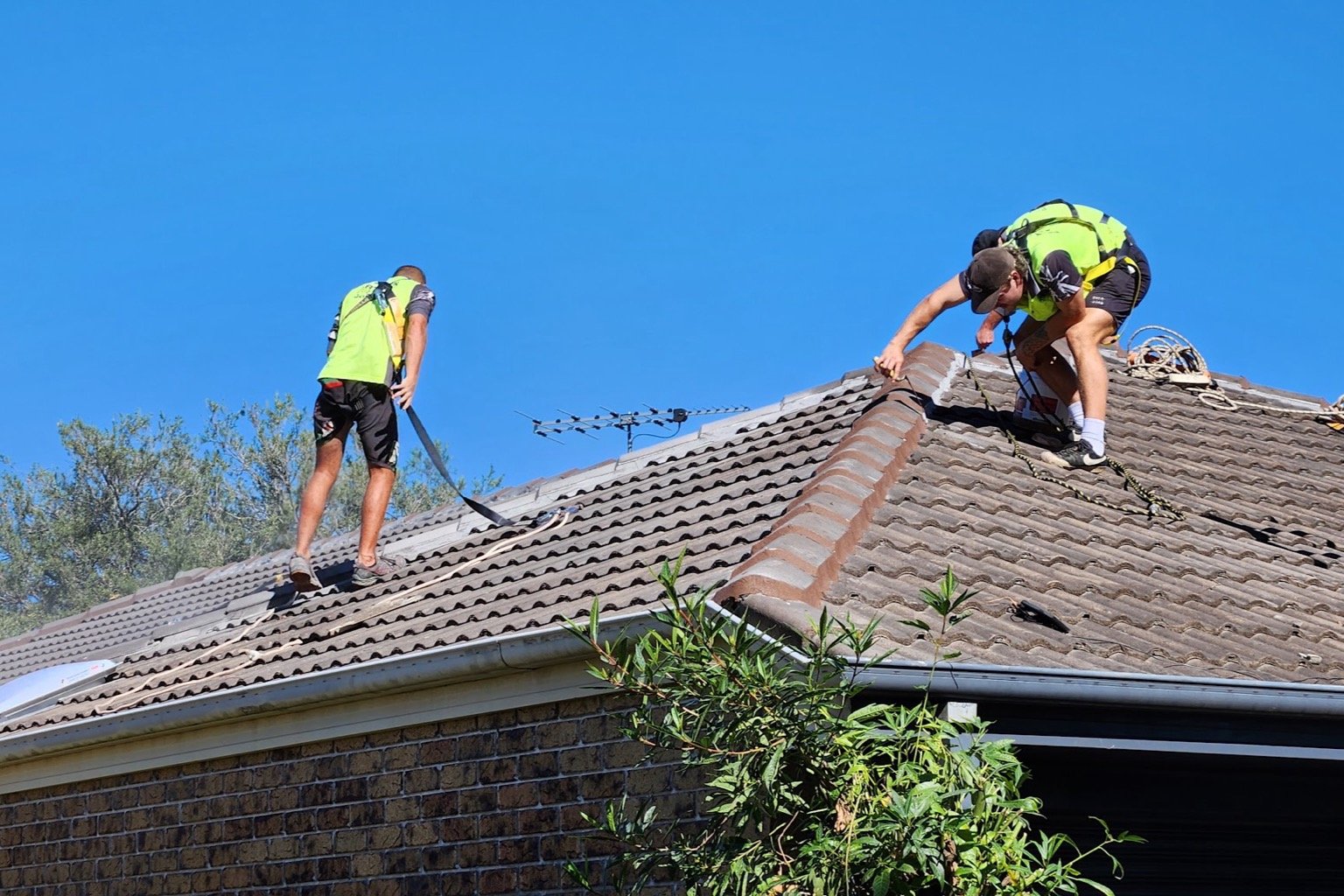
- How access and safety will be managed on site
- Expected duration and any staging of the work
- How residents will be notified and what disruption to expect
- What happens if additional damage is found once work starts
- Warranty details and what they cover
A quote that breaks the work down building by building is also far easier to stage across financial years if the committee needs to.
Working Around Residents
A roof over occupied units is a different job to a roof over an empty house.
People are home during the day. Cars are parked underneath. Balconies, courtyards, pools and common walkways sit directly below the work area. Pets and small children are around.
Good planning handles most of this. Residents should know which buildings are being worked on and when, where not to park, and roughly how long the noise will last. Work areas need to be managed so debris and tools stay contained.
Clear communication before the work starts prevents most of the complaints that come afterwards.
Access and Safety Need to Be Planned
Multi storey complexes bring access issues that a single storey house does not.
Depending on the site, work may require scaffolding, elevated work platforms, anchor points or edge protection. Courtyards and landscaping may limit where equipment can be set up. Narrow driveways can restrict access for larger plant.
These things affect both the cost and the timeline, so they should be identified during the quoting stage rather than discovered on day one.
It is also worth confirming that any contractor on site is appropriately licensed and insured for the work being carried out.
Planning Ahead Instead of Reacting
Roofs are one of the larger shared assets in a scheme, and they deteriorate predictably.
A complex that has its roofs inspected on a regular cycle, keeps a record of condition, and plans the work into its budget tends to spend less and argue less than one that waits for the next leak to force a decision.
If your scheme has a sinking fund forecast, roof condition is worth keeping current in it rather than relying on an estimate made years ago.
Storm Season Finds the Weak Points
Older complexes tend to show their roofing problems during the first serious storm of the season.
Wind driven rain pushes water into gaps that stay dry in ordinary weather. Blocked gutters back up and send water under tiles at the eaves. Loose ridge capping that has been holding on quietly finally lets go.
Having the roofs checked before storm season, rather than after, is the simplest way to reduce the number of emergency call outs a scheme has to deal with.
Final Thoughts
Tiled roofs on unit complexes and townhouse developments need to be managed as a single shared asset, not as a series of individual leaks.
That means getting a whole of complex report, understanding what is urgent and what can be staged, quoting the work building by building, and planning access and resident communication properly before anyone goes up.
Storm Call Roofing Projects Pty Ltd provides tiled roof inspections, reports, repairs and restorations for body corporates, strata managers and property managers across Brisbane and the Gold Coast. If your scheme has roofing issues or needs a condition report, contact us today for an honest inspection and practical roofing advice.