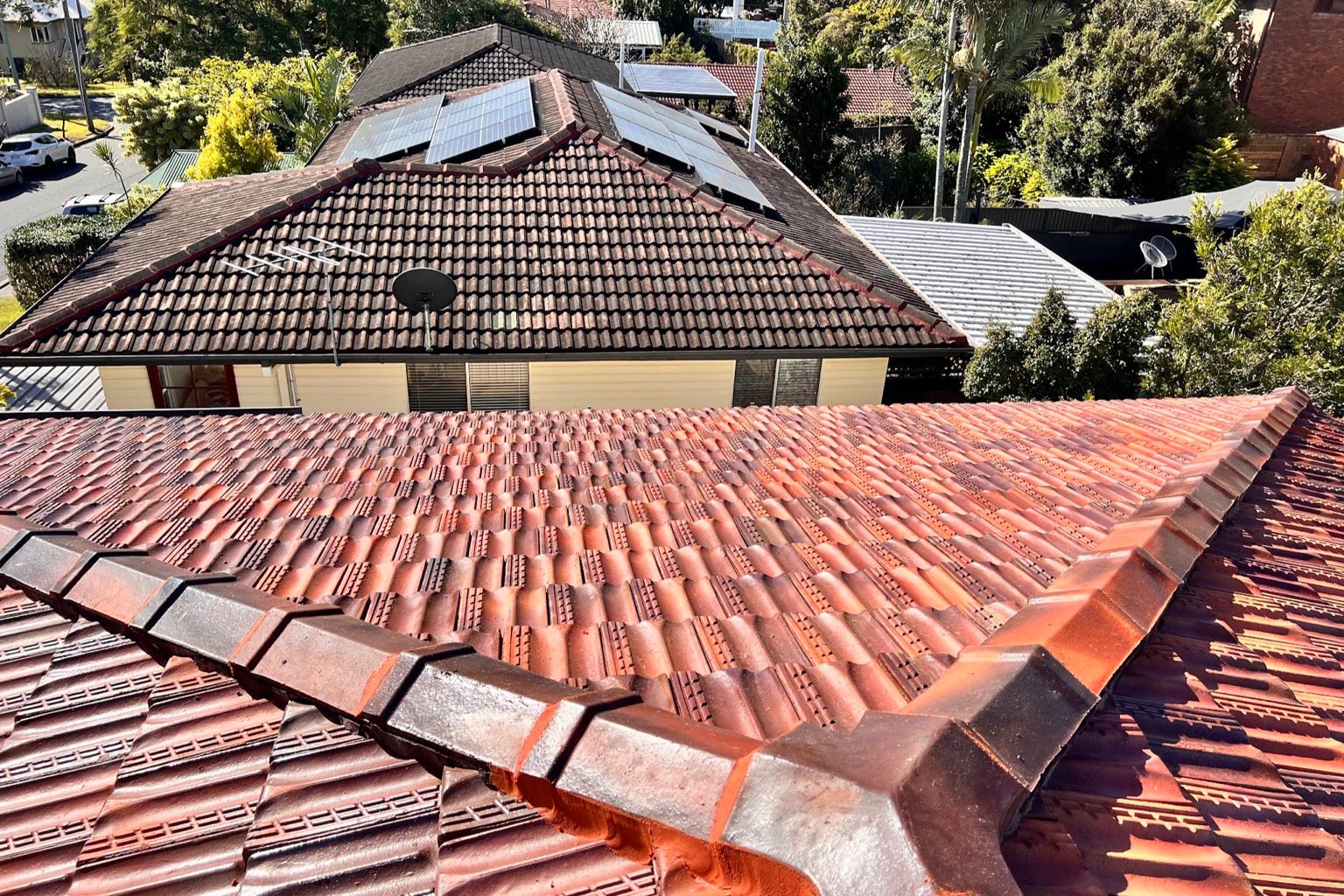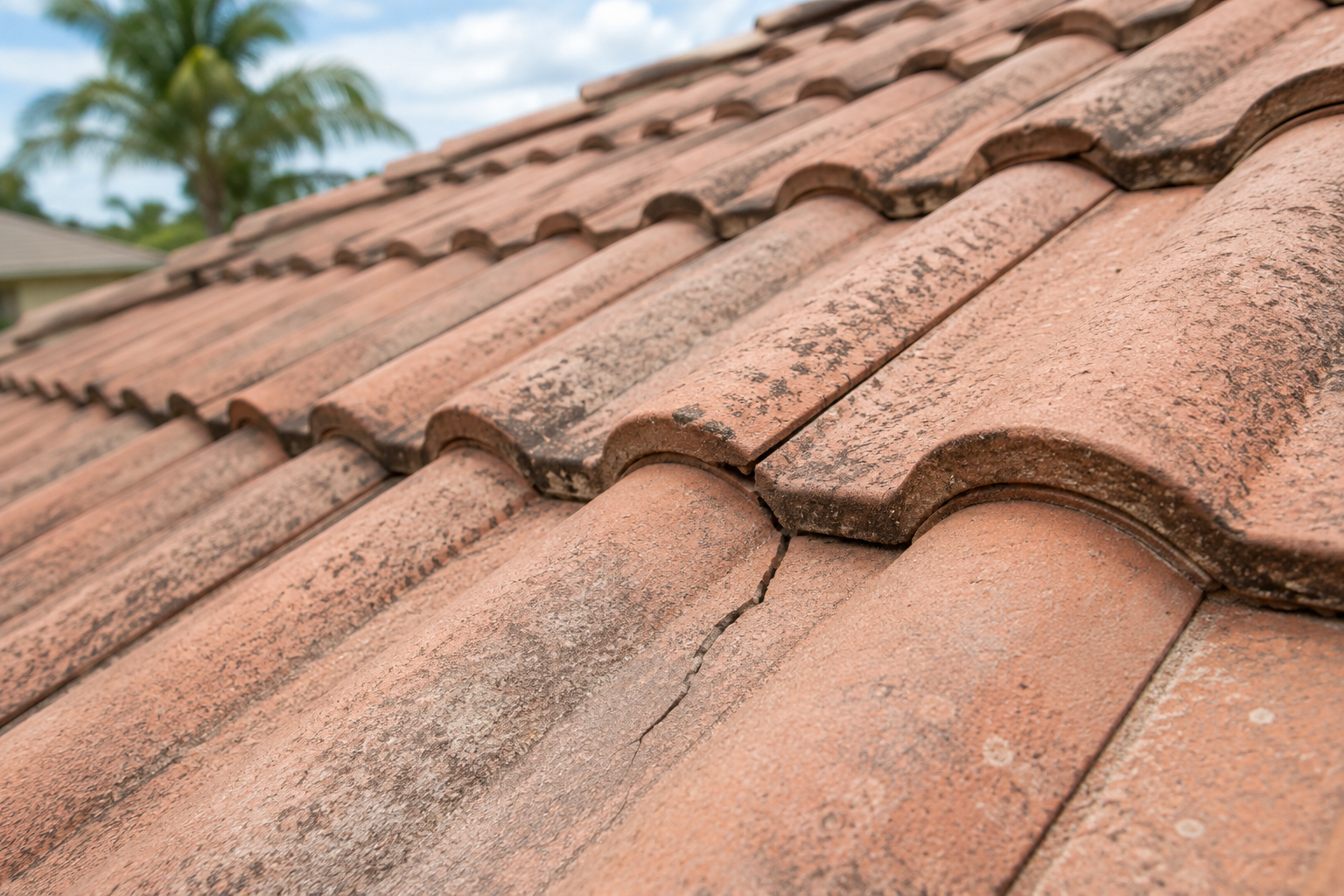
Queensland has more rooftop solar than anywhere else in the country, and a lot of it sits on tiled roofs. So when a homeowner starts thinking about a roof restoration, the panels are usually the first complication that comes up.
The questions are always the same. Do the panels have to come off? Who takes them off? Will the system still work afterwards?
They are good questions, because the answer changes the cost, the timeline and the sequence of the job.
At Storm Call Roofing Projects Pty Ltd, we restore and repair a lot of tiled roofs with solar already installed across Brisbane and the Gold Coast. Here is how it usually works.
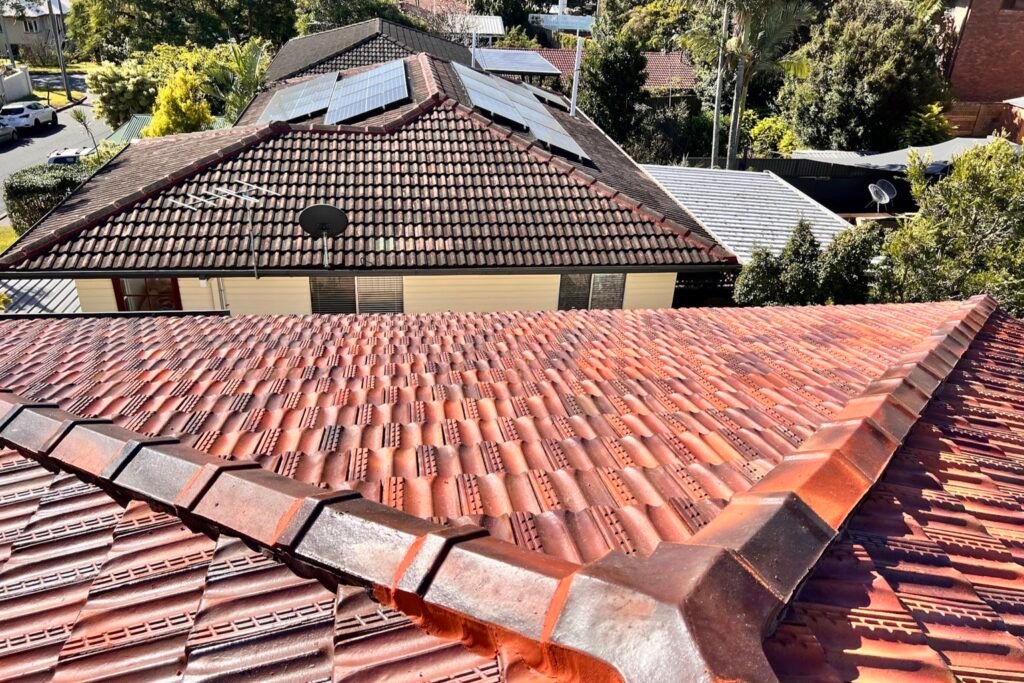
Whether the Panels Come Off Depends on the Work
Not every job needs the system removed.
If the work is limited to one section of the roof, a gutter replacement, or a repair well away from the array, the panels can often stay where they are.
A full roof restoration is different. A restoration normally involves cleaning the whole roof, repointing or rebedding the ridge capping, replacing broken tiles and applying a protective coating. That work needs access to every tile, including the ones underneath the panels.
In most full restorations, the array is removed and refitted. A roof replacement always requires it.
Why Working Around Panels Causes Problems
It is sometimes possible to work around a small array, but it is rarely a good idea on a restoration.
Panels sit on rails only a short distance above the tiles. That gap is too tight to clean properly, too tight to coat evenly, and too tight to replace a broken tile underneath.
The result is a roof that looks restored everywhere except for a large rectangle that was skipped. The tiles under the panels stay dirty, stay uncoated and stay unchecked, and if one of them is cracked, the leak stays too.
It also creates a practical problem later. If a tile under the array fails in two years, the panels have to come off anyway, and by then the surrounding roof has a coating that no longer matches.
Who Removes and Refits the System
This is the part that catches people out.
Removing and refitting a solar system is electrical work. It needs to be done by a licensed electrician or an accredited solar installer, not by a roofer. The isolation, disconnection, reconnection and testing all sit on the electrical side of the job.
What normally happens is that the two trades are coordinated. The solar installer removes the panels and rails, the roofing work is carried out with clear access, and the installer returns to refit and recommission the system.
If you still have a relationship with the company that installed the system, they are usually the easiest place to start. They will know the mounting hardware and the inverter setup.
What Is Usually Found Under the Panels
Once an array comes off, the tiles underneath often tell a story.
Because that section has been shaded and sheltered for years, it can be in noticeably better condition than the rest of the roof, with less fading and less surface wear. That is the good outcome.
The less welcome outcome is the one we also see regularly. Shaded tiles can hold moisture for longer, so moss and lichen build up. Leaf litter and debris collect under the array and never wash away. Cracked tiles sit unnoticed because nobody can see them from the ground.
Either way, it is worth knowing what is under there before you commit to a coating.
Mounting Feet Are a Common Leak Point
Every solar array on a tiled roof is held down by brackets that pass through or sit under the tiles.
Those fixing points are penetrations, and like any penetration they rely on being installed correctly. Over time, a bracket can work loose, a tile can crack where the bracket bears on it, or the fixing can shift slightly as the roof moves through heat and cold.
When a leak appears near an array, the mounting points are one of the first things worth checking.
A restoration is a good opportunity to have those tiles inspected and replaced if needed, because the array is already off and the access is already there.
The Best Time to Restore Is Before Solar Goes On
If you are weighing up solar and you already suspect the roof is tired, the order matters.
Restoring the roof first means the panels are mounted onto sound, freshly checked tiles, and you avoid paying to remove and refit a system you only installed a year or two earlier.
Putting solar on a roof that is close to the end of its life usually means doing the work twice.
It is worth having the roof assessed honestly before the solar quote is signed, rather than afterwards.
Signs Your Roof Should Be Looked At Before the Panels Go On
A few things are worth checking before committing to a solar installation:
- Visible cracked, chipped or slipped tiles
- Crumbling mortar along the ridge capping
- Moss, lichen or heavy surface staining
- Any history of leaks, even ones that were patched
- Tiles that are no longer manufactured and hard to match
- A roof that has never been restored and is more than about twenty five years old
None of these rule out solar. They simply mean it is worth getting the roof sorted first.
Questions Worth Asking Before You Book
If you have solar and you are organising roof work, a few questions will save a lot of back and forth.
Ask whether the panels need to come off for the scope of work quoted. Ask who is arranging the removal and refit, and whether that cost sits inside the roofing quote or separately. Ask how long the system will be off, and whether the tiles underneath will be inspected while the array is down.
Ask what happens if a problem is found under the panels once they are removed.
Clear answers up front make the job run far more smoothly.
Planning the Downtime
Most homeowners want to know how long they will be without the system.
With the trades coordinated properly, the panels come off at the start of the roofing work and go back on once the roof is finished and cured. The exact timing depends on the size of the roof, the scope of the restoration and the weather, which in South East Queensland is always a factor.
The main thing is to book the work as one sequence rather than two separate jobs, so the system is not sitting on the ground for longer than it needs to be.
Final Thoughts
Solar and tiled roofs work well together, but the roof underneath has to be sound.
For a full restoration, the panels will almost always need to be removed, refitted by a licensed electrician or accredited installer, and the tiles underneath checked while the access is there. Done in the right order, it is a straightforward job. Done in the wrong order, it becomes an expensive one.
Storm Call Roofing Projects Pty Ltd provides tiled roof restorations, roof repairs and roof inspections across Brisbane and the Gold Coast, including homes with solar already installed. If you are planning solar or planning a restoration, contact us today for an honest inspection and practical roofing advice.