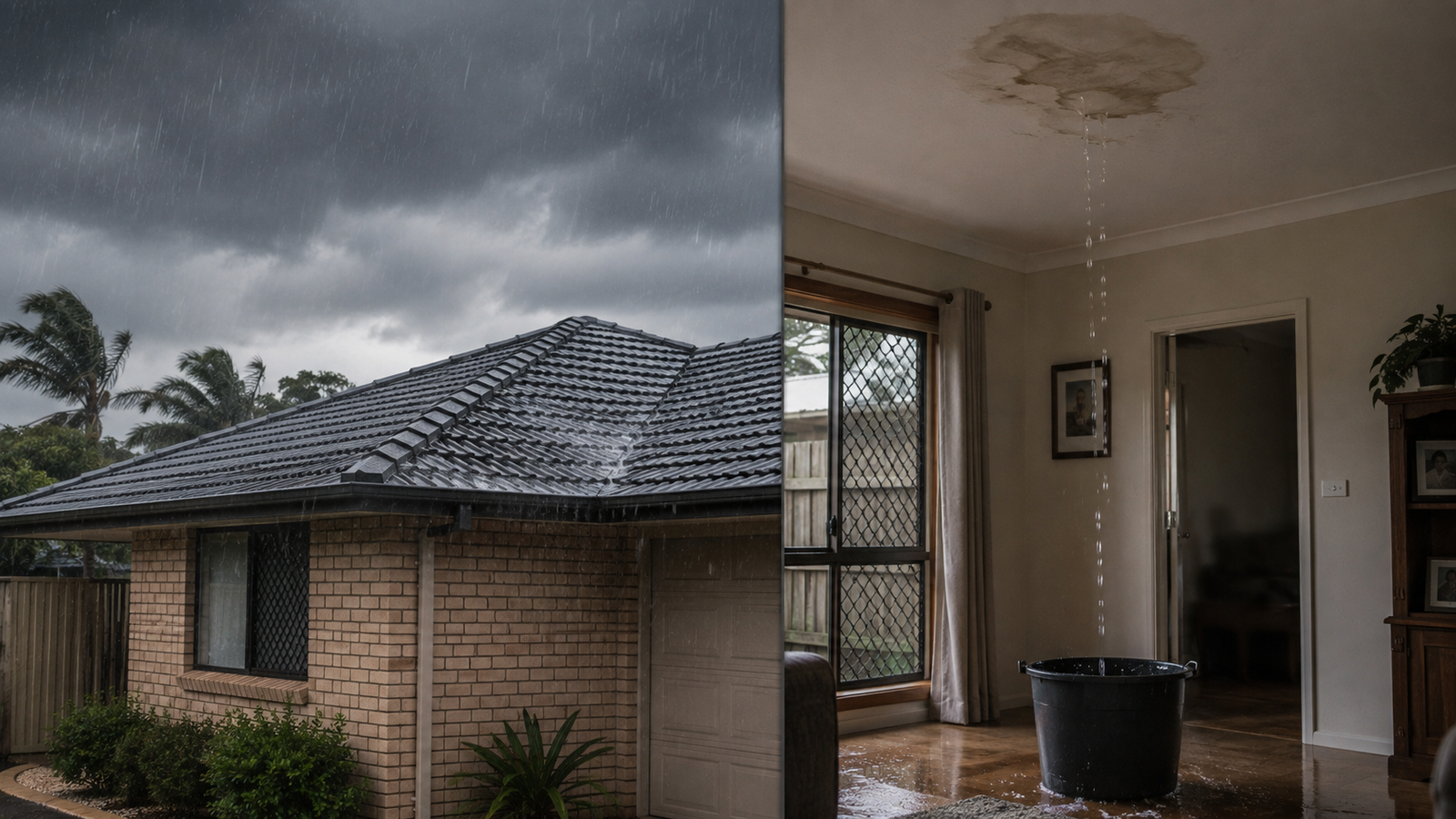
When you notice a water stain on the ceiling, a drip during heavy rain, or a damp smell inside the home, it is easy to assume the leak is directly above the visible mark.
With tiled roofs, that is not always the case.
Water can enter through one section of the roof, travel along battens, timber framing, sarking, or ceiling lines, then show up somewhere completely different inside the home. This is why a proper roof leak inspection is so important.
At Storm Call Roofing Projects Pty Ltd, we carry out tiled roof inspections across Brisbane and the Gold Coast to identify where water is getting in and what needs to be repaired.
Why Roof Leak Inspections Matter
A roof leak inspection is designed to find the cause of the leak, not just the visible damage inside the home.
Many homeowners try to trace the issue from the ceiling stain, but this can be misleading. The stain may show where the water ended up, not where it entered the roof.
A professional inspection looks at the full roofing system, including the roof exterior, internal signs of water movement, and common weak points on tiled roofs.
This helps avoid guesswork and reduces the chance of paying for repairs that do not solve the problem.
Checking the Signs Inside the Home
The inspection often starts with the signs the homeowner has noticed inside the house.
This may include water stains, bubbling paint, damp plasterboard, mould growth, musty smells, or dripping during rain. These clues help narrow down the likely area of concern.
However, internal signs are only one part of the picture. A leak near a hallway, bedroom, light fitting, or wall corner may still be caused by an entry point higher up the roof.
That is why the internal location is used as a guide, not a final answer.
Looking Inside the Roof Cavity
Where access is safe and practical, the roof cavity may also be checked.
Inside the roof cavity, a roofer may look for water staining, damp insulation, mould, timber discolouration, rust marks, or evidence of water tracking along framing.
This can help confirm the path water has taken after entering the roof.
In some cases, the roof cavity gives valuable clues that are not visible from outside. In other cases, limited access, insulation, or the timing of the leak may make external inspection even more important.
Inspecting Roof Tiles
On the roof, the tiles are carefully checked for damage and movement.
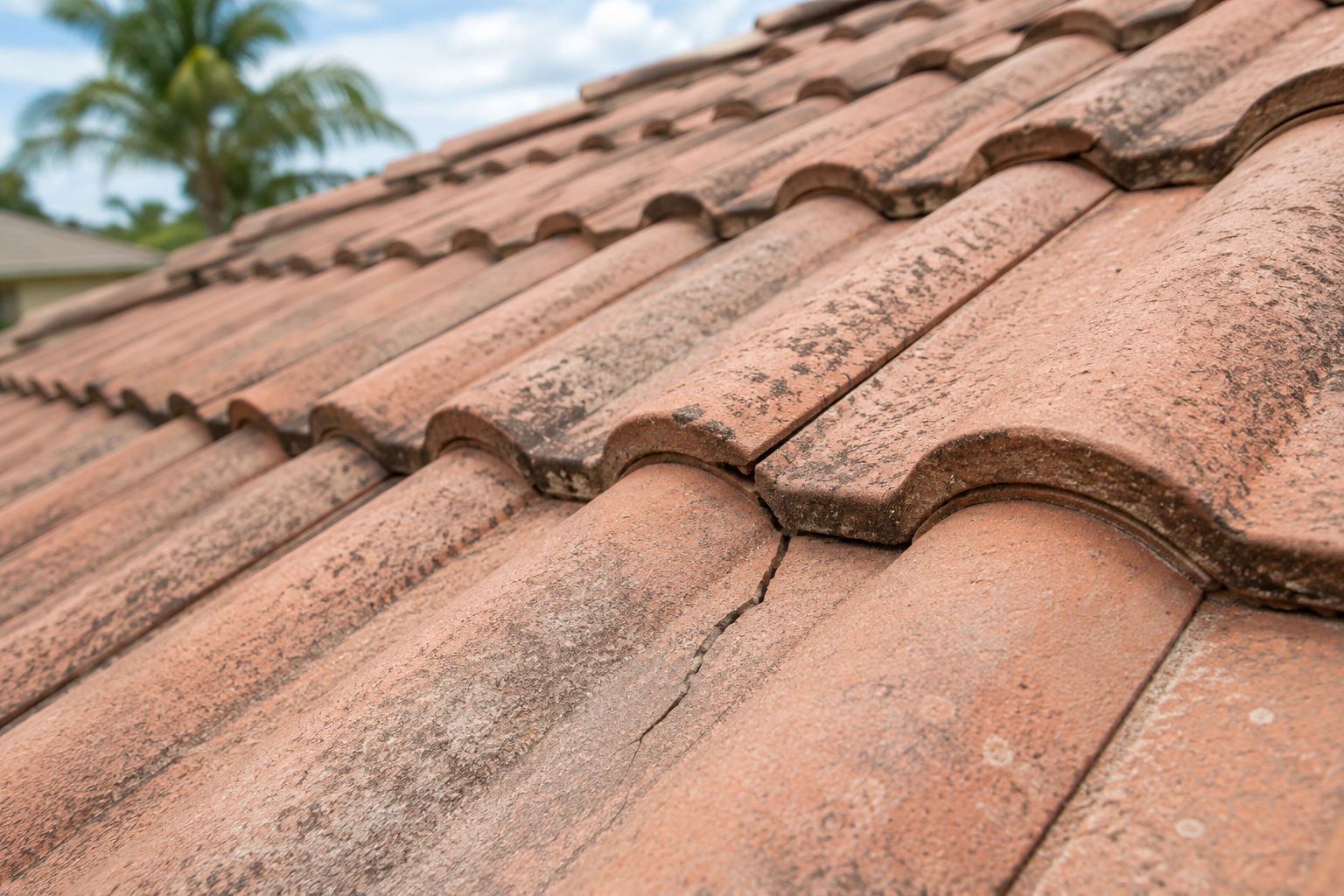
Common issues include cracked tiles, broken corners, slipped tiles, poorly fitted replacement tiles, brittle tiles, or tiles that have been disturbed by storms, trades, wildlife, or foot traffic.
Even one damaged roof tile can allow water into the roof cavity during heavy rain, especially if the tile sits in a high-flow area.
A tiled roof inspection helps identify whether the issue is localised or part of a wider roof problem.
Checking Ridge Capping and Pointing
Ridge capping is another common area checked during a roof leak inspection.
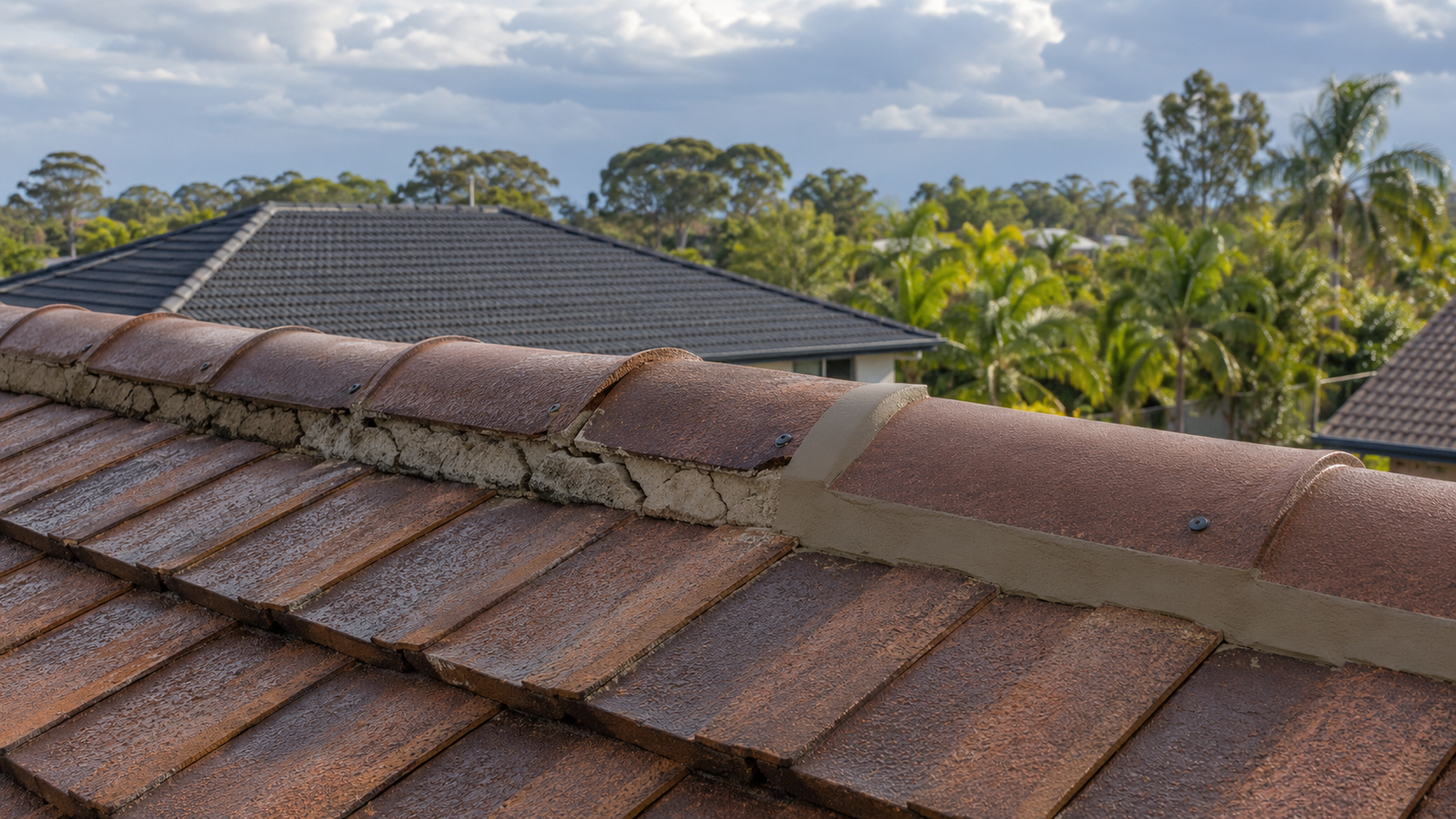
The roofer will look for cracked pointing, loose ridge caps, deteriorated bedding, gaps, or signs that water may be entering along the roof ridges and hips.
This is especially important on older tiled roofs across Brisbane and the Gold Coast, where sun, storms, and temperature changes can break down older mortar and pointing over time.
If ridge capping has failed, water can enter during windy rain and travel across the roof cavity before appearing inside the home.
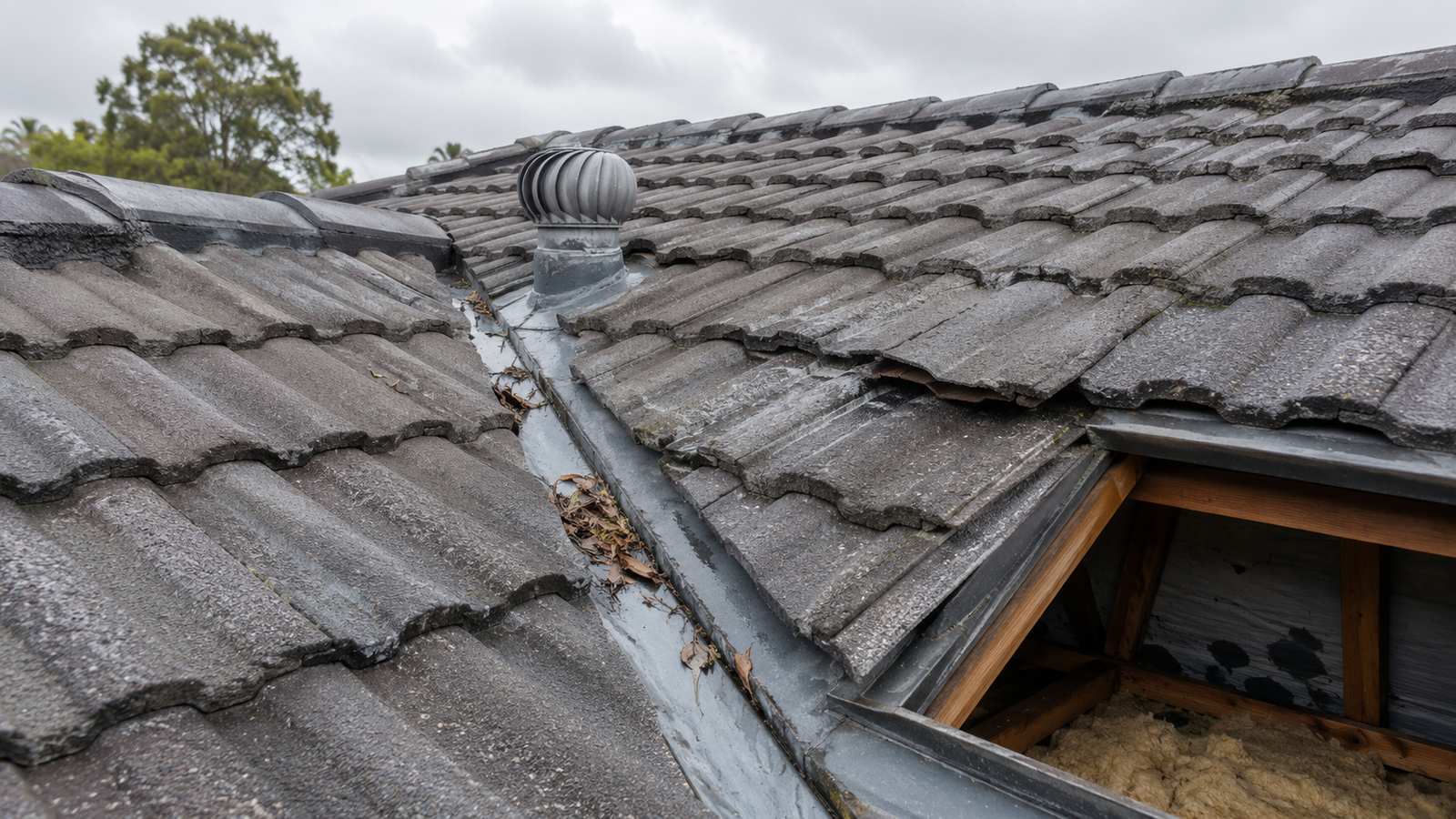
Inspecting Roof Valleys
Roof valleys carry large volumes of water during rain, so they are a key part of any leak inspection.
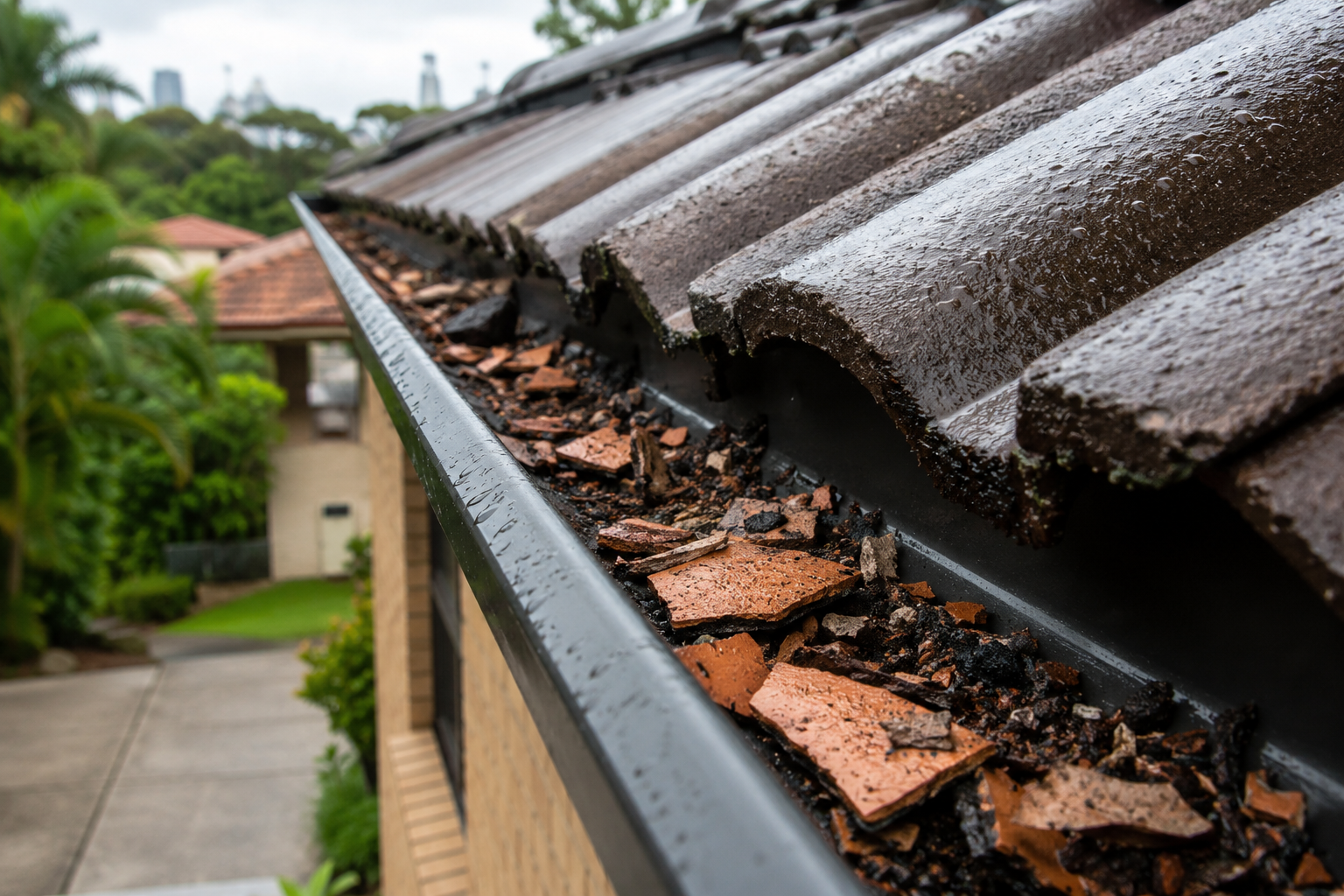
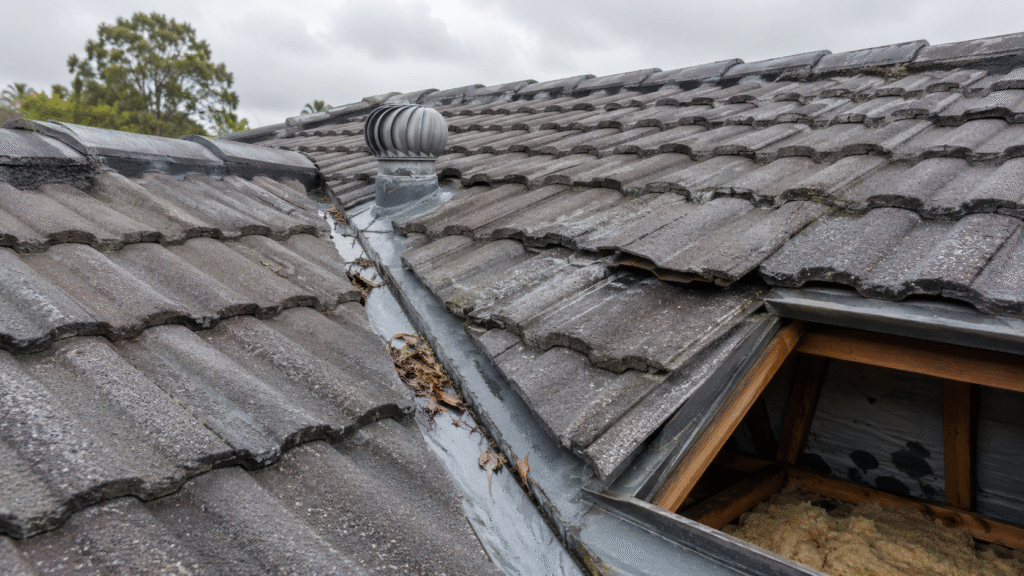
A roofer will check whether valleys are blocked, rusted, damaged, poorly aligned, or overwhelmed by debris. Leaves, twigs, moss, and dirt can slow water flow and cause water to back up under the tiles.
Valley leaks can be difficult for homeowners to identify because the water may travel before it becomes visible inside the house.
Keeping valleys clear and in good condition is essential for tiled roof performance.
Checking Flashings and Roof Penetrations
Flashings are designed to stop water entering around joins, edges, and roof penetrations.
During an inspection, these areas may be checked around chimneys, skylights, vents, walls, and other roof details. Flashings can deteriorate, lift, crack, or separate over time, especially after storms or previous poor repairs.
Leaks around roof penetrations are often worse during wind-driven rain because water is pushed into gaps that may not leak during light rainfall.
A proper roof leak detection process looks closely at these areas rather than assuming the tiles are always the problem.
Looking at Gutters and Water Flow
Gutters and drainage are also part of the inspection.
Blocked or overflowing gutters can force water back towards the roof edge, fascia, or ceiling cavity. In heavy rain, this can create leaks that appear to be a roof tile issue when the real problem is poor water flow.
A roofer may check gutters, downpipes, valleys, roof edges, and the way water is moving across the roof.
This is especially important before and during Queensland storm season, when roof drainage has to handle sudden heavy downpours.
Why Leak Detection Is Not Always Obvious
Roof leaks are not always simple.
A roof may look fine from the ground but still have cracked tiles, loose ridge capping, hidden valley issues, or flashing problems. Water can also enter during certain weather conditions only, such as heavy rain, sideways rain, or storms from one direction.
This is why quick patch jobs often fail. If the true source of the leak is not identified, the same problem can return during the next downpour.
A proper inspection gives the roofer a clearer understanding of what is happening and what repair is actually needed.
What Happens After the Inspection?
After the inspection, the roofer should explain what was found and what repair options are available.
Depending on the issue, the solution may involve replacing damaged tiles, repairing ridge capping, fixing valleys, addressing flashing problems, clearing drainage areas, or completing more detailed tiled roof repairs.
The goal should always be to fix the cause of the leak, not just cover the symptom.
Final Thoughts
A roof leak inspection is about finding where water is entering, how it is travelling, and what needs to be repaired to stop the issue properly.
For tiled roofs, this means checking more than the ceiling stain. Tiles, ridge capping, valleys, flashings, gutters, roof penetrations, and water flow all need to be considered.
Storm Call Roofing Projects Pty Ltd provides roof leak inspections and tiled roof repairs across Brisbane and the Gold Coast. If you have noticed water stains, damp smells, or leaks during rain, contact us today for a professional inspection and honest advice.